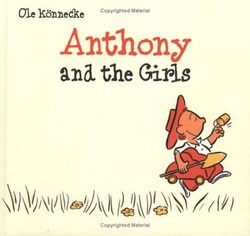
Book Review: Anthony and the Girls by Ole Konnecke

AnthonyFirst published on 30th July, 2006 in The Star

READING OLE Konnecke’s delightful Anthony and the Girls (Farrar, Straus and Giroux, 32 pages) I was irresistibly reminded of that Shania Twain song in which she fails to be impressed by various suitors despite their fast cars, good looks etc.

Thankfully, unlike Ms Twain in the promotional video for that song, the girls in this picture book (translated by Nancy Seitz) are not clad in leopard skin. Read More »

Book Review: Chasing Vermeer by Blue Balliett

chasing vermeerFirst published on 6th February, 2005 in StarMag

CHASING VERMEER

By Blue Balliett

Illustrated by Brett Helquist

Publisher: Scholastic

SEVERAL foreign reviews have called Chasing Vermeer a children’s Da Vinci Code, but I think the only thing the books have in common is that they encourage an interest in art, or at least certain artists and their works.

A number of portraits by Dutch painter Johannes Vermeer appear in Blue Balliett’s novel, but none harbour secrets about Christianity or the, supposedly, true identity of biblical figures. There are no codes to crack, no puzzles to work out, no trails to follow in Chasing Vermeer. Rather, it becomes gradually clear that the mysteries in this book are solved by methods that are themselves mysterious. They remain, till the very end, unexplained phenomena.

As a result, some readers might close the book feeling short-changed. Personally, I was surprised that so little logic went into the mapping and unfolding of the plot. Pentominoes feature largely in the story, but although they are a mathematical tool, they are used in a strangely fanciful, even superstitious, manner.Read More »
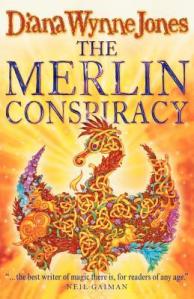
Book Review: The Merlin Conspiracy by Diana Wynne Jones

the merlin conspiracyFirst published in 2004 in The Star
THE MERLIN CONSPIRACY
By Diana Wynne Jones
Publisher: Collins Voyager, 480 pages
DIANA Wynne Jones. This name should be familiar to those of you who follow my weekly column. I have featured her books often and never miss the chance to say that I think she is a much better writer than J.K. Rowling whose Harry Potter and the Philosopher’s Stone rang dozens of bells when I first read it. If you know Jones’s work well, you will see how Rowling’s is so obviously derivative of it in terms of concepts, plots and even characters.

Read More »

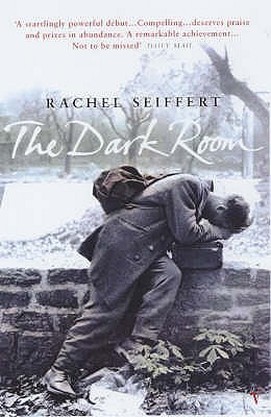
Book Review: The Dark Room by Rachel Seiffert

the dark roomFirst published 5th July 2002

Review by DAPHNE LEE

THE DARK ROOM
By Rachel Seiffert
Publisher: Pantheon

RACHEL Seiffert’s debut novel The Dark Room looks at the horrors of Nazi Germany from the perspective of three young Germans who are more observers than participants of the events that unfold around them. Indeed, one of these individuals, Micha, lives in 1990s Germany and it is his grandfather who provides the link to the atrocities committed by Hitler’s Third Reich during World War II.Read More »

Book Review: Elegy for Iris by John Bayley

First published on 14th June, 2002 in StarTwo

Review by DAPHNE LEE

ELEGY FOR IRIS

By John Bayley

Publisher: Picador, 288 pages

WHETHER you are of the opinion that Iris Murdoch’s novels are full of subtle wisdom, graceful prose and illuminating insight or that her style is deliberately, snobbishly pedantic and ponderous, you still can’t deny that her writing reflects a mind that is at once complicated and lucid, vigorous and tranquil – to be sure, a beguiling if somewhat daunting combination of qualities.

That such a brain, teeming with ideas and bristling with life, should be destroyed by Alzheimer’s disease is something that would strike most of us as particularly unfair, tragic and ironic.

Murdoch was diagnosed with the mentally debilitating condition in the mid 1990s. Prior to her illness she was a scholar and philosopher, an admired and respected essayist, poet and playwright, and the author of 26 critically acclaimed novels. She was also a beloved wife and this fact remained unchanged until her death in 1999.

Elegy For Iris – also available as Iris: A Memoir of Iris Murdoch (Abacus) – allows us a close-up view of the woman, her work, her life and marriage. It is a personal viewpoint – her husband, teacher and critic, John Bayley, is the author and he presents Murdoch as he knew her and saw her.

Read More »

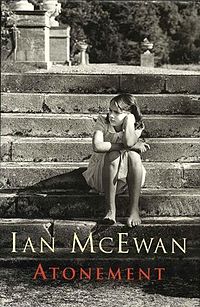
Book Review: Atonement by Ian McEwan

atonementFirst published on 10th May, 2002 in StarTwo

ATONEMENT

By Ian McEwan

Publisher: Jonathan Cape, 388 pages

THE NOVEL begins with the description of a child’s bedroom. It is ”the only tidy upstairs room in the house”. Its owner, Briony Tallis, is an almost obsessively secretive and orderly child. Her need to organise, her desire to invest a meaning, purpose, function and station to everything is seen in the neatness of her surroundings: every thing is in its place and there’s a place for every thing. Soon, you think, she will apply this belief to her dealings with people. But not yet. At 13, living in near-seclusion on the family estate, Briony’s social interactions are limited to those with her family members who treat the baby of the house with indulgence, affection and condescension. This frustrates the girl, who sees only too clearly how ridiculous she may appear, with her locked drawers and secret codes, keeping hidden things that no one is the least curious about.

Feeling a lack control over her own appallingly mundane existence and faced with the awkwardness and uncertainty of approaching adolescence, she turns to writing stories, retreating into make-believe worlds where incredible and awful things happen with almost clockwork regularity and lives can be reduced, organised and summed up within a neat paragraph or two.

Read More »