
The next time someone who has never read high fantasy asks me to recommend a book to start with, I shall point them in the direction of Dark Lord of Derkholm. It’s a parody of the genre, but also a good example of a high fantasy novel.
It is also packed with irony (a joke in itself considering the effect iron has on magic and how magic is the backbone of high fantasy), is delightfully subtle, and lacks the tedious self-importance that plagues most of these works.
Derkholm is set in a world that is practically enslaved to host fantasy adventures for tour groups from another world (which sounds like ours). These organised adventures are practically all that the inhabitants of the world do; it’s being going on for years; and they’ve just about reached their limit.
A decision is made to put a stop to the tours and two oracles are consulted as to how to go about doing so. The book recounts what follows.
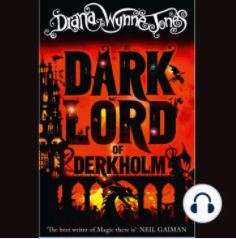 It’s genius how DWJ hides the main tropes and themes of high fantasy (like the reluctant hero and the battle between good and evil) behind the sham situation that is the plot of Derkholm. Nothing is quite what it seems as every character is playing a double role in the story, and fulfilling meta roles too.
As with all DWJ’s books, the moment everything clicks into place is so hugely satisfying that you can almost hear your bones and brain sighing in contentment. I’ve heard that the author had once mentioned that she wrote her novels without much planning, but simply by letting the story flow out of her. Sounds like magic to me.
 (This is definitely going to be less rambling than the post I wrote for Excellent Women! I shall try to keep it short.)
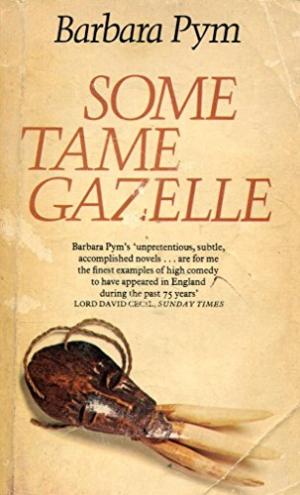 While Less Than Angels is about a community of anthropologists, Some Tame Gazelle, Barbara Pym’s first published novel, features her other favourite profession, the clergy.
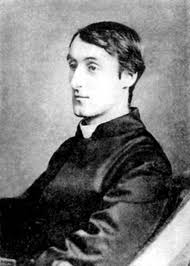 In the first chapter of the novel we are introduced to Harriet’s latest young curate, Edgar Donne (I picture him looking like the poet Gerard Manley Hopkins [right]. Bizarrely, I also picture the Archedeacon looking like Hopskins!), who has come to the Bede’s for supper, and, as the book progresses, we meet the other characters, part of the Bede’s circle, including Henry and Agatha Horcleve; Count Ricardo Bianco, an Italian nobleman settled in their village, who is in love with Harriet and proposes to her regularly and in vain; Edith Liversidge, a ‘decayed gentlewoman’, and her poor relation, the dreary harp-playing Connie Aspinall who will not stop speaking of her days as companion to a lady in Belgrave Square.
 daphne lee