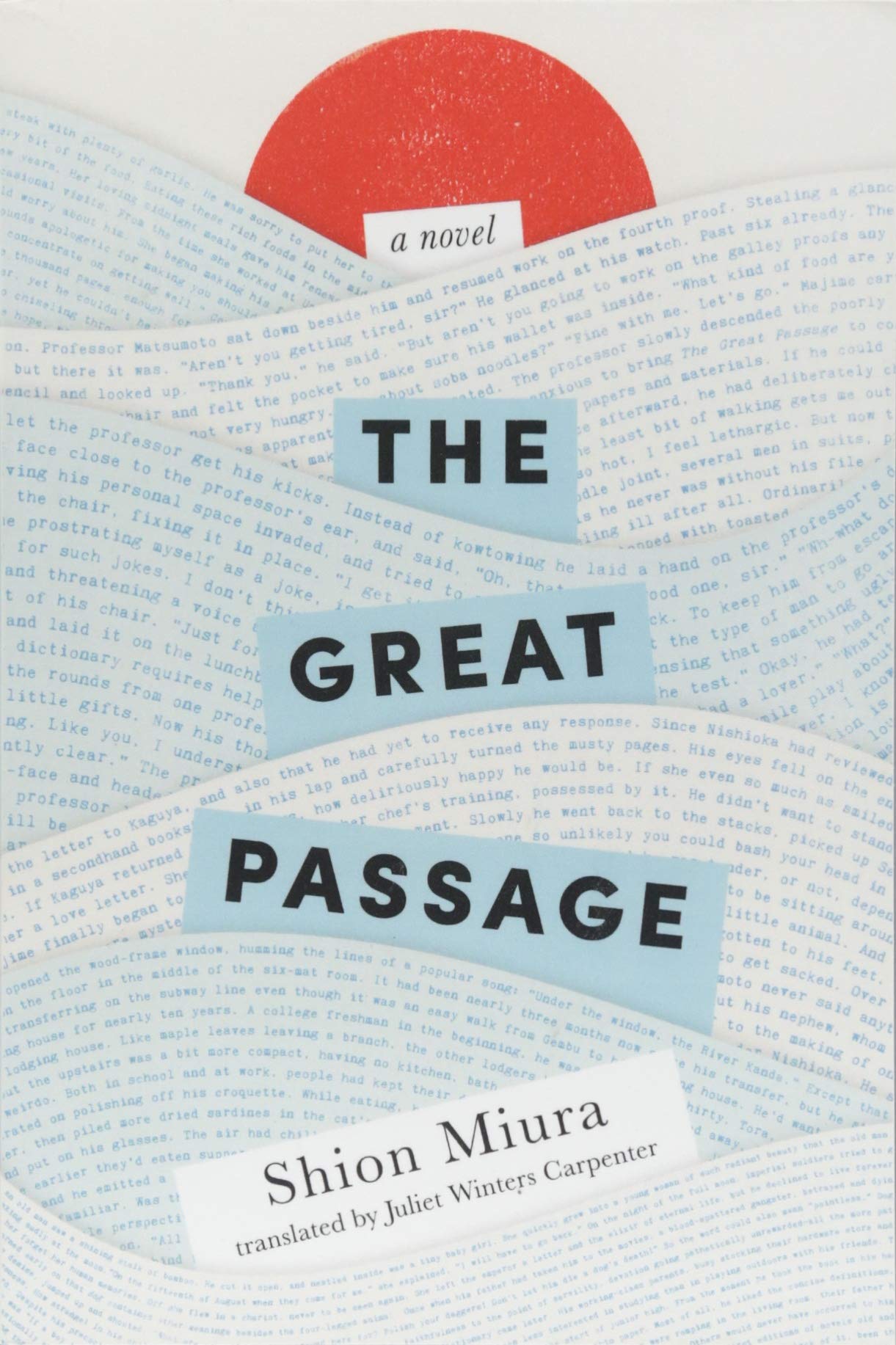
 I first read Miura Shion’s The Great Passage ((舟を編む, Fune wo Amu) back in 2020, right after I watched the film version, but reading it meant I skipped a lot of it. Unfortunately, this is what I tend to do when I read a book for the first time. It takes me several reads before a book is truly read. So, if I read a book just once there’ll be a lot of it that I’ll miss. Anyway, I recently decided to listen to the audiobook on Scribd. Audiobooks force me to pay attention to every word although I sometimes zone out. When this happens I usually rewind the narration. Somehow, I am more likely to do this than reread a paragraph.
Audiobooks aren’t always the answer if the narrator decides to put on hammy accents or simply if their voice grates on my nerves. Thankfully, Brian Nishii, the narrator of The Great Passage audiobook (published by Brilliance Audio), is close to perfect. His surname suggests he’s Japanese and so his pronunciations of the characters’ and other proper names, and also Japanese phrases, doesn’t sound awkward or forced. Plus, he has a pleasant, likeable voice.
 The story is about a group of lexicographers at a publishing house, called Gembu, and their latest project, ‘The Great Passage’. At the start of the book, the editor, Akari Kohei announces that he has to leave to care for his sick wife. The director of the department, Professor Matsumoto, says that he will never find another editor as good and devoted to dictionary making as Akari is. This makes Akari determined to find a replacement before he leaves. It seems like an impossible task given that you come to realise that it would take as it becomes evident that it takes a rare type of person to live up to Akari and Professor Matsumoto’s exacting standards. To add to the challenge, Akari has to make his selection from the existing employees of the publishing house: Although a large company, most of the staff view making dictionaries as boring and a waste of time.Read More »


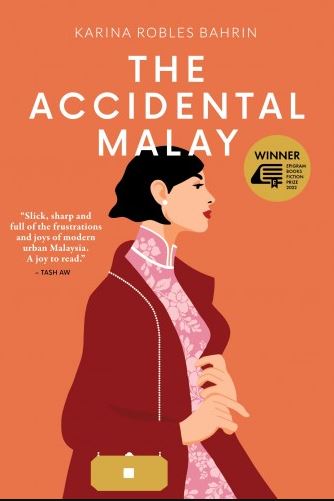 There are some Malaysian topics and issues that need to be written about and not just in the form of essays and articles, but as stories that allow for thorough exploration and interrogation as can only be done through fiction. Hanna Alkaf’s The Weight of Our Sky is such a story, as is The Accidental Malay by Karina Robles Bahrin. It’s no accident that both novels centre matters of race that all Malaysians are familiar with, in one way or another. Hanna’s book is set during the infamous May 13 race riots of 1969. Karina’s is about a woman who is raised Chinese but discovers that her mother is Malay.
 Today I needed to write a paragraph on a book I’d recently read and it reminded me how long it’s been since I last updated this blog.
 I am back, with my thoughts on Temple Alley Summer by Kashiwaba Sachiko! The book is translated by Avery Fischer Udagawa, with illustrations by Satake Miho, and published by Yonder, an imprint of Restless Books.
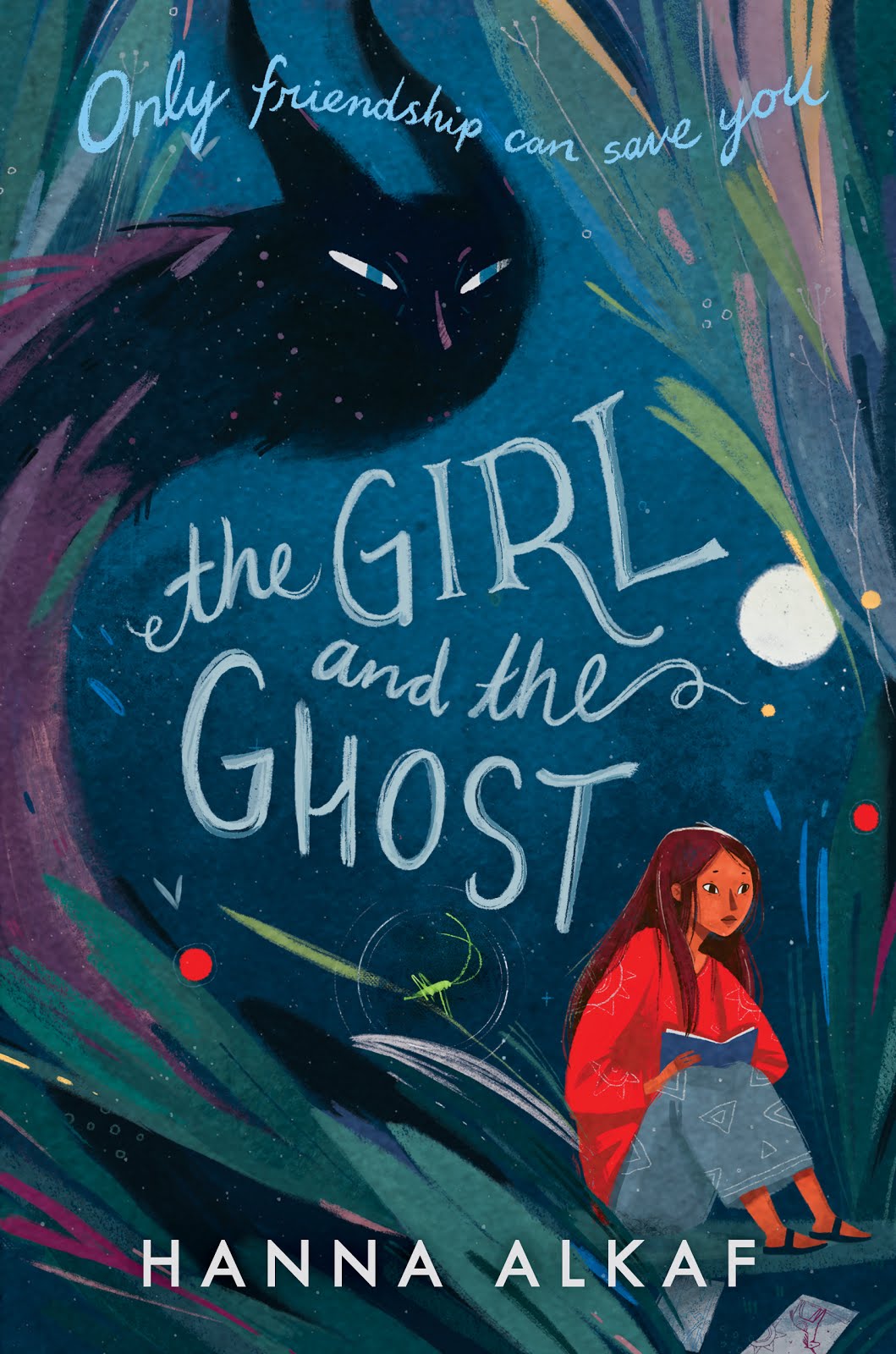 What a gorgeous story. The premise, the telling, the characters: I liked most everything about it. I’d been a little wary because someone had mentioned that it’s about a pelesit who becomes the friend of a little girl. I was wary because pelesit are Malay familiar spirits that are used by their owners to possess victims and I didn’t particularly like the idea of such a creature being turned into a cute Disney-type character. However, my fears were pretty much unfounded. The friendship between the pelesit and the girl is framed in such a way that makes it plausible, natural and even necessary. Also, the spirit itself declares that it is ‘not a character from some childhood tale’, a meta moment that I hugely appreciated. TGATG is a childhood tale, but of course it’s not that kind of childhood tale, the sort that sanitizes the heck out of our stories, wringing out all but their most
 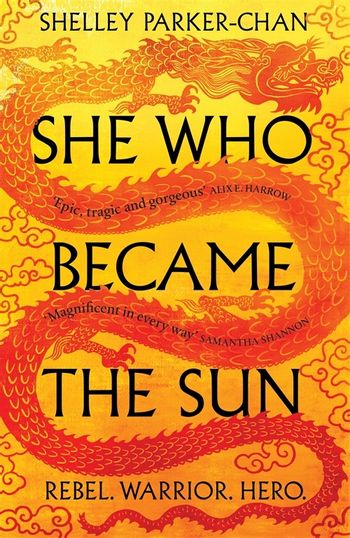 Peasant boy Zhu Chongba is promised greatness by a fortune teller, while his sister (unnamed throughout the book) is declared ‘nothing’. But when Chongba dies, that sister (already shown to be the more shrewd and competent of the two siblings) decides to take on his identity and claim the greatness that Zhu Chongba’s destiny. To escape starving in the famine that grips the land, the girl goes to Wuhuang Monastery, which her brother was dedicated to as an ailing infant, and by sheer will and persistence, is enrolled as a novice monk. Thus begins her life as Zhu Chongba and despite setbacks and hardships, she does succeed, first at the monastery where her potential is recognised by the abbot, and then as one of the leaders of the Red Turban rebels and so on to the ultimate triumph: the dragon throne.
 daphne lee