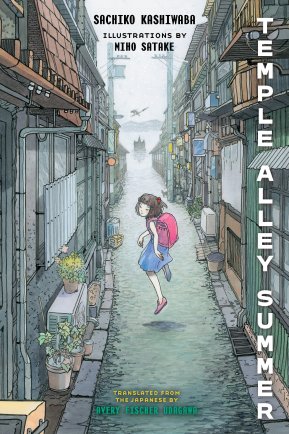
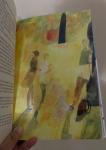
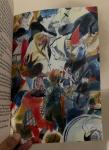
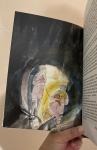
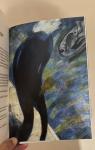
I am back, with my thoughts on Temple Alley Summer by Kashiwaba Sachiko! The book is translated by Avery Fischer Udagawa, with illustrations by Satake Miho, and published by Yonder, an imprint of Restless Books.
I found it an easy read and the premise was interesting and even thrilling, especially in the early chapters, before the narrator (and readers) know what exactly is going on.
Kazu sees a girl leaving his family’s home early one morning. She is wearing a white kimono, much like how his late grandfather was dressed for his burial! Kazu is convinced he’s seen a ghost and even more so when he has to research old place names at school and learns that his own street was once called Kimyō Temple Alley — Kimyō meaning ‘return to life’.Read More »
I haven’t updated in ages (feels like it), but here’s a quick post to say that Witch Week is around the corner and you can get all the details at Lizzie Ross’s blog!
I think I’ve said before that I don’t celebrate Halloween, but I do pay attention if the festivities are linked to books and writing. Will be joining in the shenanigans and will try to look like the chap in the pic (not easy considering how I’m totally the opposite of bony).
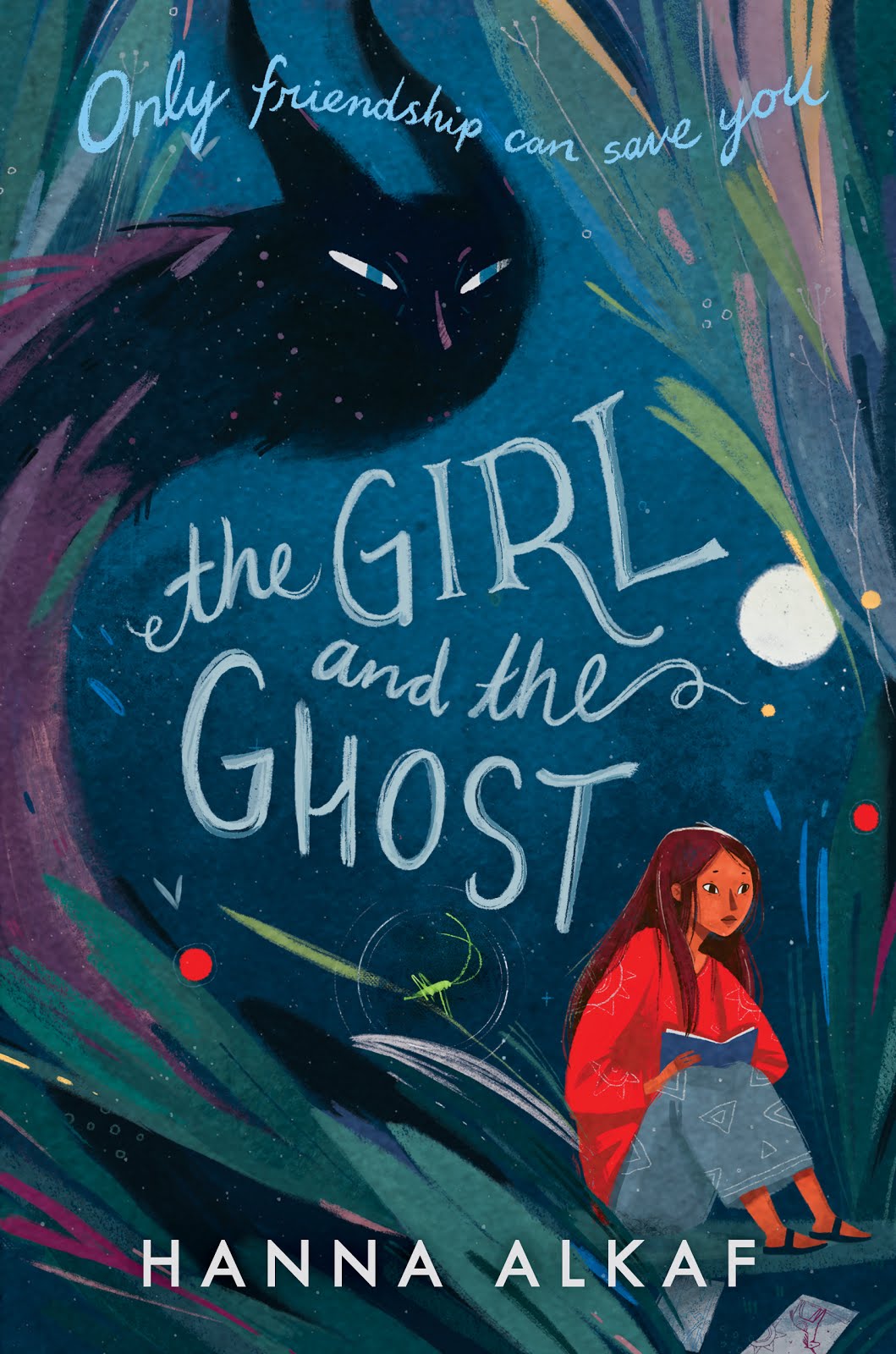
What a gorgeous story. The premise, the telling, the characters: I liked most everything about it. I’d been a little wary because someone had mentioned that it’s about a pelesit who becomes the friend of a little girl. I was wary because pelesit are Malay familiar spirits that are used by their owners to possess victims and I didn’t particularly like the idea of such a creature being turned into a cute Disney-type character. However, my fears were pretty much unfounded. The friendship between the pelesit and the girl is framed in such a way that makes it plausible, natural and even necessary. Also, the spirit itself declares that it is ‘not a character from some childhood tale’, a meta moment that I hugely appreciated. TGATG is a childhood tale, but of course it’s not that kind of childhood tale, the sort that sanitizes the heck out of our stories, wringing out all but their most attractively exotic commercially viable cultural details.Read More »
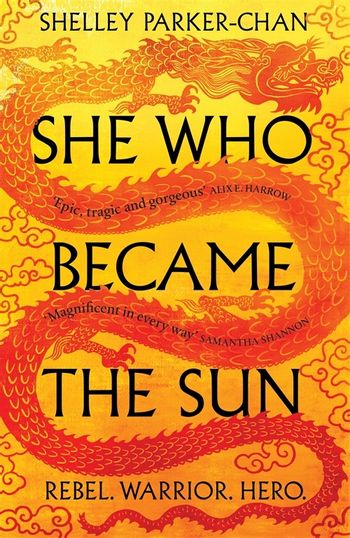
Peasant boy Zhu Chongba is promised greatness by a fortune teller, while his sister (unnamed throughout the book) is declared ‘nothing’. But when Chongba dies, that sister (already shown to be the more shrewd and competent of the two siblings) decides to take on his identity and claim the greatness that Zhu Chongba’s destiny. To escape starving in the famine that grips the land, the girl goes to Wuhuang Monastery, which her brother was dedicated to as an ailing infant, and by sheer will and persistence, is enrolled as a novice monk. Thus begins her life as Zhu Chongba and despite setbacks and hardships, she does succeed, first at the monastery where her potential is recognised by the abbot, and then as one of the leaders of the Red Turban rebels and so on to the ultimate triumph: the dragon throne.
No spoilers — this novel, Shelley Parker-Chan’s debut, is the first book of a trilogy about the rise of the first Ming emperor. We come to the book knowing that the main character (Zhu) will achieve her goal. How she goes about it and whether she becomes great simply because she has tricked Heaven into thinking that she’s ‘Zhu Chongba’ or because it is her destiny (despite her gender) to be great are questions that fixed my attention and held the story in my mind when I was not in the middle of it (I listened to the audio recording) and even after I completed it.
My short story collection Bright Landscapes is now available as an ebook, published by Langsuyar Press. The ebook is a revised edition of the original collection and contains additional notes and illustrations.
Bright Landscapes comprises ten stories inspired by Malaysian/Asian myths, legends and supernatural beliefs.
The book costs USD4 and, at the moment, PayPal is the only pay option for readers outside Malaysia (Malaysians or anyone with a Malaysian bank account can pay by fund transfer, email me at daphne@daphnelee.org).
Please leave a note telling me the email you’d like the ebook sent to. Thank you for buying the book, I hope you enjoy it. All comments are welcome on Goodreads.
The audio book image for ‘Black Water Sister’ by Zen Cho, narrated by Catherine Ho.
I completed the audio recording of Black Water Sister by Zen Cho a couple of weeks ago. The story is set in Penang and tells of Jessamyn Teoh, a young woman who has lived in the US most of her life, but must move back to Malaysia with her parents when her father falls ill and loses his job in the States.
To complicate the whiplash-sudden change of life and lifestyle, Jessamyn is a closeted lesbian who plans to escape Penang and reunite with her girlfriend when the latter moves Singapore for graduate school. Plus, once in Penang, she finds herself haunted. By her recently-dead maternal grandmother.
We read The Dark is Rising this month, or rather some of us did. I couldn’t fit it in, what with re-reading Pamela Dean’s Tam Lin and listening to She Who Became the Sun by Shelley Parker-Chen. Perhaps book club reads should take priority, but I suspect I would have made more of an effort if I’d wanted to. I like The Dark is Rising, and I know it’s a much better book than Over Sea, Under Stone; that it’s wonderfully atmospheric and haunting, intense and exciting, but I’m just not in love with it. This has something to do with Will Stanton who is a nice boy, but just not my favourite as I find him too bland and unobjectionable. Jane is arguably just as boring, but she is the one whom I love, so I will definitely be re-reading Greenwitch, September’s book.
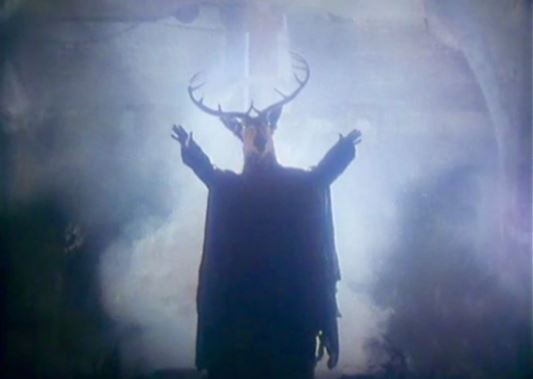
I did not choose to make time for The Dark is Rising, but I did spare a thought for Herne the Hunter. When I first read the book, the wild hunt made a strong impression on me. I suspect it was the first time I encountered anything as mysterious and frightening in English folklore. When I lived in England in the 90s, I was disappointed to find that no one I met (then) had heard of him, but in the early 90s, I was delighted that Herne was a key character in ITV’s Robin of Sherwood. Alas, the show has not aged well and the mysterious, mystical Herne now just looks like a man taking the piss in a deer costume. (One of my flatmates in Eastbourne came from Herne Bay, but to my great disappointment, the town was not named after the antlered man, but merely refers to a neighbouring village and its geographical placement, herne or hyrne meaning corner in Old English.)
A screenshot of Herne (played by John Abineri) from ITV’s Robin of Sherwood (1992).
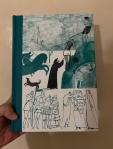
The cover of my Folio Society Edition of Over Sea, Under Stone.
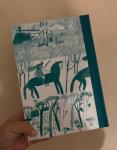
The back cover of my FS edition of Over Sea, Under Stone.
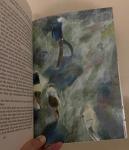
Trewissick Harbour by Laura Carlin.
The dark and dusty attic. Illustration by Laura Carlin.
Exploring the headland. Illustration by Laura Carlin.
The signs that wax and wane but never die. Illustration by Laura Carlin.
In the middle of the night. Illustration by Laura Carlin.
Trewissick Carnival. Illustration by Laura Carlin.
Over sea and under stone. Illustration by Laura Carlin.
The grail. Illustration by Laura Carlin.
This is not a review, but some thoughts I have about Over Sea, Under Stone by Susan Cooper, and the Famous Five series by Enid Blyton. Beware of spoilers.
I belong to a Fantasy Book Club that focuses on YA and children’s fantasy fiction and in July we started reading Susan Cooper’s The Dark is Rising Sequence. Unfortunately, I did not have time to read the first book, Over Sea, Under Stone, but this is one series which I’ve reread so often that I know it well, or well enough to join in a discussion without needing a fresh re-read.
Now, The Dark is Rising Sequence is one of my all-time favourite fantasy series and you know how it is with favourite books: They’re almost like your children in that you feel a little protective about them. Therefore, when the club met up on Google Meets to discuss OSUS and one of the group seemed less than enthusiastic about the book, I kinda bristled with indignation, but tried to cover it up with an understanding (and probably strained) smile. However, when she said the book was ‘kiddyish’, I was ready to throw hands. Read More »
Dee Char is the author of Mr Low and the Magic of Borneo, a children’s book set in the foothills of Mount Kinabalu. It is an adventure story as well as the coming-of-age tale of Bibi, a Dusun child who must learn to deal with the unique gift she possesses as well as the changes and threats that her community is facing.
Dee (who is based in Kota Kinabalu, Sabah) and I met on Zoom as fellow writers and committee members of the Malaysian Writers Society. From our subsequent text- and video-conversations, it’s been evident how interested and passionate she is about Kadazandusun (the unification term and the collective name for more than 40 sub-tribes who are the native speakers of Dusunic languages and some non-Dusunic speaking tribes who call themselves Dusun or Kadazan) culture, and traditional arts and skills.
I interviewed Dee recently via email, about the experience of writing and publishing her first book, and how she hopes to write more stories that feature indigenous lore.Read More »
If you’re a Malaysian who reads fantasy fiction and enjoys those that draw on Celtic, Norse or Greek mythology, you may have longed for stories based on the myths and legends of our land. True that we are probably better acquainted with dwarves and elves than with pelesit and bunian, but this is precisely why we need more fiction that links us to these old tales, our own old tales.
I have been a fan of Tutu Dutta since I reviewed Timeless Tales of Malaysia, her collection of eleven folk stories, published by Marshall Cavendish in 2009. Before I read this book, I had only a sketchy idea of the stories in it, and Timeless Tales was the first really decent (English language) collection I’d come across.
Dutta has since published other folktale collections, as well as novels for young readers and a picture book. She has also co-edited an anthology of short stories inspired by local folktales.Read More »
 I am back, with my thoughts on Temple Alley Summer by Kashiwaba Sachiko! The book is translated by Avery Fischer Udagawa, with illustrations by Satake Miho, and published by Yonder, an imprint of Restless Books.
 What a gorgeous story. The premise, the telling, the characters: I liked most everything about it. I’d been a little wary because someone had mentioned that it’s about a pelesit who becomes the friend of a little girl. I was wary because pelesit are Malay familiar spirits that are used by their owners to possess victims and I didn’t particularly like the idea of such a creature being turned into a cute Disney-type character. However, my fears were pretty much unfounded. The friendship between the pelesit and the girl is framed in such a way that makes it plausible, natural and even necessary. Also, the spirit itself declares that it is ‘not a character from some childhood tale’, a meta moment that I hugely appreciated. TGATG is a childhood tale, but of course it’s not that kind of childhood tale, the sort that sanitizes the heck out of our stories, wringing out all but their most
  Peasant boy Zhu Chongba is promised greatness by a fortune teller, while his sister (unnamed throughout the book) is declared ‘nothing’. But when Chongba dies, that sister (already shown to be the more shrewd and competent of the two siblings) decides to take on his identity and claim the greatness that Zhu Chongba’s destiny. To escape starving in the famine that grips the land, the girl goes to Wuhuang Monastery, which her brother was dedicated to as an ailing infant, and by sheer will and persistence, is enrolled as a novice monk. Thus begins her life as Zhu Chongba and despite setbacks and hardships, she does succeed, first at the monastery where her potential is recognised by the abbot, and then as one of the leaders of the Red Turban rebels and so on to the ultimate triumph: the dragon throne.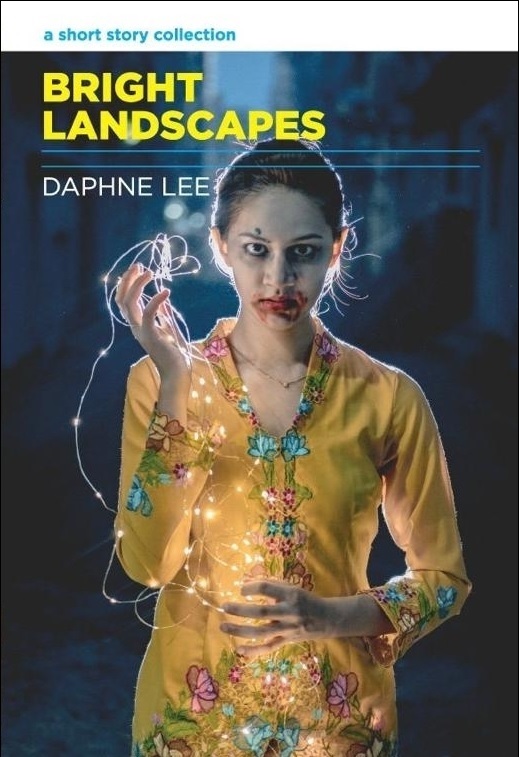





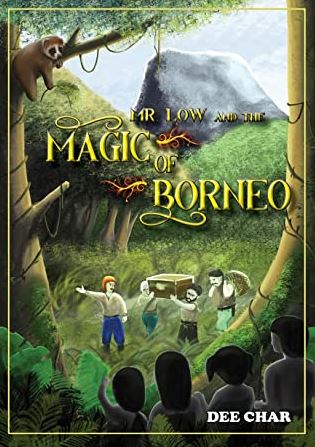 Dee Char is the author of Mr Low and the Magic of Borneo, a children’s book set in the foothills of Mount Kinabalu. It is an adventure story as well as the coming-of-age tale of Bibi, a Dusun child who must learn to deal with the unique gift she possesses as well as the changes and threats that her community is facing.
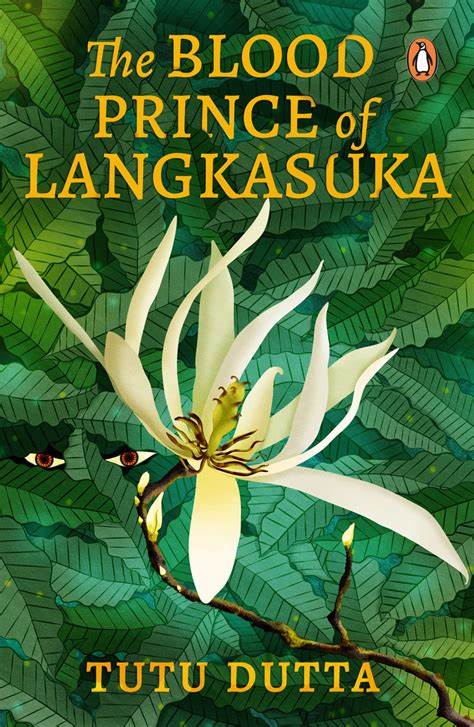 If you’re a Malaysian who reads fantasy fiction and enjoys those that draw on Celtic, Norse or Greek mythology, you may have longed for stories based on the myths and legends of our land. True that we are probably better acquainted with dwarves and elves than with pelesit and bunian, but this is precisely why we need more fiction that links us to these old tales, our own old tales.
 daphne lee