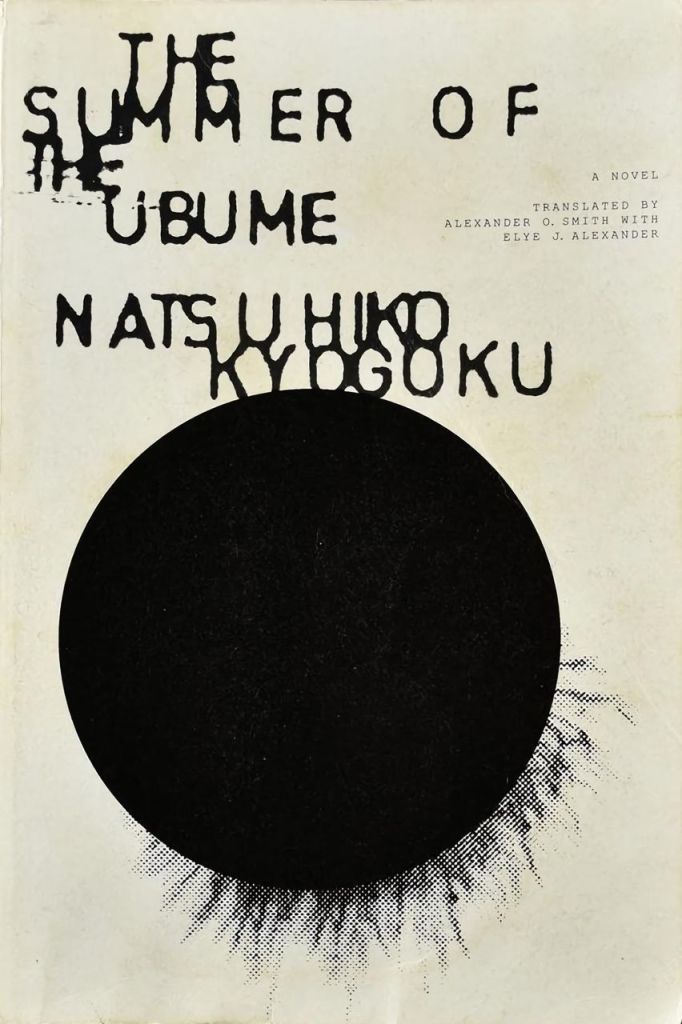
Natsuhiko Kyogoku’s debut novel arrives with a genuinely compelling premise: a woman pregnant for twenty months, a husband who vanished from a locked room, and the shadow of an ancient Japanese spirit—the ubume, a ghost born of a woman who dies in childbirth—hanging over a crumbling clinic in postwar Tokyo. For readers drawn to the intersection of folklore and mystery, this setup promises something atmospheric and unsettling.
The novel’s greatest strength is, frustratingly, the source of its greatest weakness. Kyogoku is clearly a man of enormous intellectual curiosity, and his occult detective Kyogokudo is a vehicle for extended, elaborate meditations on the psychology of belief, the neurology of self-deception, and the philosophical underpinnings of why humans need the supernatural. These passages are not without merit—the central idea that the brain actively rewrites reality to protect itself from unbearable truths is genuinely fascinating, and it pays off in the novel’s twist. But Kyogoku does not trust his reader. He explains, and then he explains again, and then he explains the explanation. By the time the actual mystery accelerates, the narrative momentum has been thoroughly bled dry.
Continue reading I am back, with my thoughts on Temple Alley Summer by Kashiwaba Sachiko! The book is translated by Avery Fischer Udagawa, with illustrations by Satake Miho, and published by Yonder, an imprint of Restless Books.
